Tunisians aiming for an Italian university (bachelor's, master's or PhD), an Italian government scholarship such as MAECI or Invest Your Talent, a research stay, or entry for work. For study, the path runs through your chosen university, then pre-enrolment on the Universitaly portal, then the visa requested from Tunisia. Opporiva is free and never applies on your behalf.
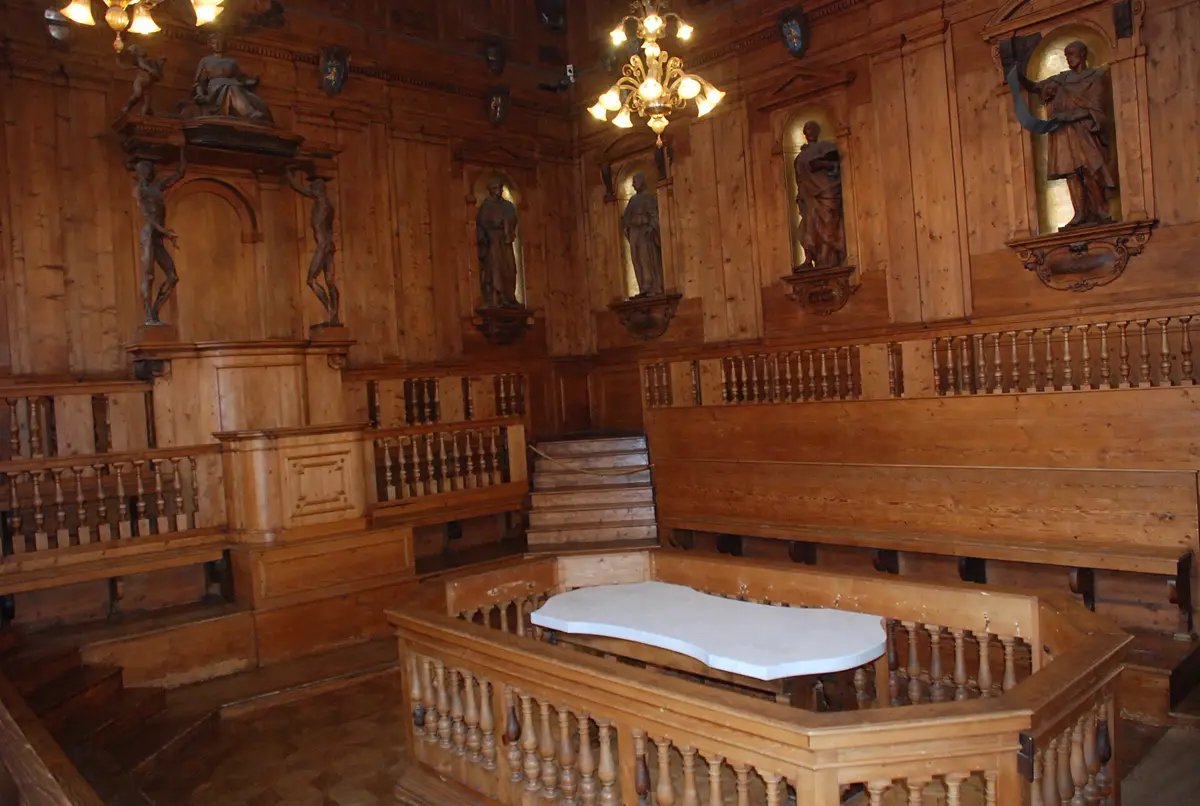
Anatomical Theatre of the Archiginnasio, University of Bologna
Applicants living abroad who need a visa first apply to the university, then complete an online pre-enrolment on Universitaly, where the university and the embassy later record their decisions. The current ministry procedures cover 2026/2027 and 2027/2028; for 2027/2028, visa applications for a bachelor's (laurea) or a laurea magistrale must be lodged by 31 October 2027, and each university may set earlier dates. For a PhD or a university Master, there is no national deadline, but you must apply before classes start. Tuition depends on the university and often on family income: to be confirmed on the institution's website. Scholarships: Invest Your Talent in Italy lists Tunisia as eligible (master's and postgraduate courses, with mandatory pre-admission to a course in the programme; amount to be confirmed in the 2027 call). The latest MAECI call, for 2026-2027, closed on 26 March 2026 at 14:00 Italian time; the 2027-2028 dates and whether Tunisia is on the list of beneficiary countries are to be confirmed on the Study in Italy portal. Regional right-to-study (DSU) grants also exist, depending on the university's region.
Entry for work in Italy takes place within annual quotas set by decree. The current planning decree covers 2026-2028 and was published in Italy's Official Gazette on 15 October 2025. The share open to Tunisian nationals, the sectors and each year's filing dates are to be confirmed in the official text and with the employer. A study residence permit allows limited part-time work; the exact hours cap is to be confirmed with the Italian authorities before you sign a contract.
Tunisians living in Tunisia apply through the provider ALMAVIVA, 8 Rue Alphonse Laveran, 1002 Tunis (Monday to Friday 9:00-17:00, Saturday 9:00-13:00). The Italian Embassy does not give appointments or accept applications by email. Fees shown on 23 October 2026: national D visa for study EUR 50 (TND 170.600) plus a service fee of TND 68.300, payable in cash in dinars; these amounts can change. On passport validity, the embassy sheet says at least 15 months in its English version and 16 months in its French version: plan for at least 16 months and have the exact rule confirmed when you file. The embassy warns against intermediaries who sell appointments.
For first-year enrolment, your secondary school diploma (baccalauréat) must be translated into Italian, apostilled and accompanied by either a declaration of value or a CIMEA certificate. For a master's, the university assesses the foreign degree itself and may ask for translations, legalisation, a diploma supplement or transcripts. CIMEA issues statements of comparability and verification through its online CIMEA-Diplome service. The declaration of value is issued by the Italian Embassy, by appointment on the Prenotami platform, free of charge when it is for further study; since 30 March 2026, diplomas must first be legalised by the competent Tunisian ministry (Education for the baccalauréat, Higher Education for university degrees).
The embassy's information sheet (July 2026 version) asks for, among others: a signed form, passport, recent photo, the Universitaly pre-enrolment letter in two copies, the original diploma with a copy, translation, apostille and declaration of value or CIMEA certificate, a language certificate, a return booking, proof of accommodation for the start of your stay, health insurance valid in Italy, financial evidence, birth and family status certificates apostilled and translated, and a socio-economic status statement from the relevant Tunisian ministry. The embassy publishes a list of sworn translators. Check which version of the sheet applies when you file.
According to the embassy's visa sheet (July 2026 version), you need a bank certificate of an irrevocable block of at least EUR 783.06 per month for 13 months, with a minimum total of EUR 10,179.85 set by the embassy, blocked for one year and transferred to Italy monthly. This proof is not required if you hold an Italian government scholarship of at least that amount, and it is reduced pro rata for courses shorter than 12 months. Add the visa (see above) and the residence permit, generally EUR 116.46 for a stay of up to one year according to Study in Italy (subject to change).
For a course taught in Italian, the visa sheet asks for Italian certification at B2 level or higher. For a course taught in English, you must prove adequate English. Even if the university has already checked your level, it may verify it again in an interview. Start Italian early even for an English-taught course: you will need it in daily life and for part-time jobs.
Within 8 working days of arrival, apply for your residence permit (permesso di soggiorno) using the yellow kit available at post offices marked Sportello Amico. Enclose copies, never originals, plus a EUR 16 revenue stamp. You also need a tax code (codice fiscale): MAECI scholarship holders can request it from the consulate before leaving; otherwise you get it from the Agenzia delle Entrate in Italy.
European Solidarity Corps (European Commission) · Rio Marina, Italy
Volunteering
Costs covered
Open to Tunisians
Deadline: Rollingno deadline
Frequently asked questions
Where do I apply for an Italian study visa from Tunisia?
At the ALMAVIVA visa centre, 8 Rue Alphonse Laveran, Tunis. The Italian Embassy does not set appointments and does not process applications sent by email.
How much must I block for an Italian study visa?
According to the embassy sheet (July 2026 version): at least EUR 783.06 per month for 13 months, with a minimum total of EUR 10,179.85, blocked irrevocably. An Italian government scholarship of at least that amount replaces this proof.
What is the deadline for the 2027/2028 intake?
For a bachelor's (laurea) or a laurea magistrale, the ministry sets 31 October 2027 as the last day to lodge visa applications for 2027/2028. Each university may set an earlier date, so check your programme's own deadline.
Can Tunisians apply to Invest Your Talent in Italy?
Yes, Tunisia is listed in the current call, for master's and postgraduate courses included in the programme. The grant amount and the 2027 call dates are to be confirmed on the official site.
What should I do when I arrive in Italy?
Apply for the permesso di soggiorno within 8 working days with the post office yellow kit, and get a codice fiscale if you do not have one yet.