Tunisian school leavers, students, graduates and researchers weighing a bachelor's, master's, PhD or research stay in China for the 2027 intake. The Chinese Embassy in Tunisia states that it runs no paid advice service on studies or scholarships and has authorised no agency to sell such advice, so be wary of paid intermediaries claiming to work with it. For reliable information it points to campuschina.org and to announcements from Tunisia's Ministry of Higher Education (mes.tn). Opporiva is free and never applies on your behalf.
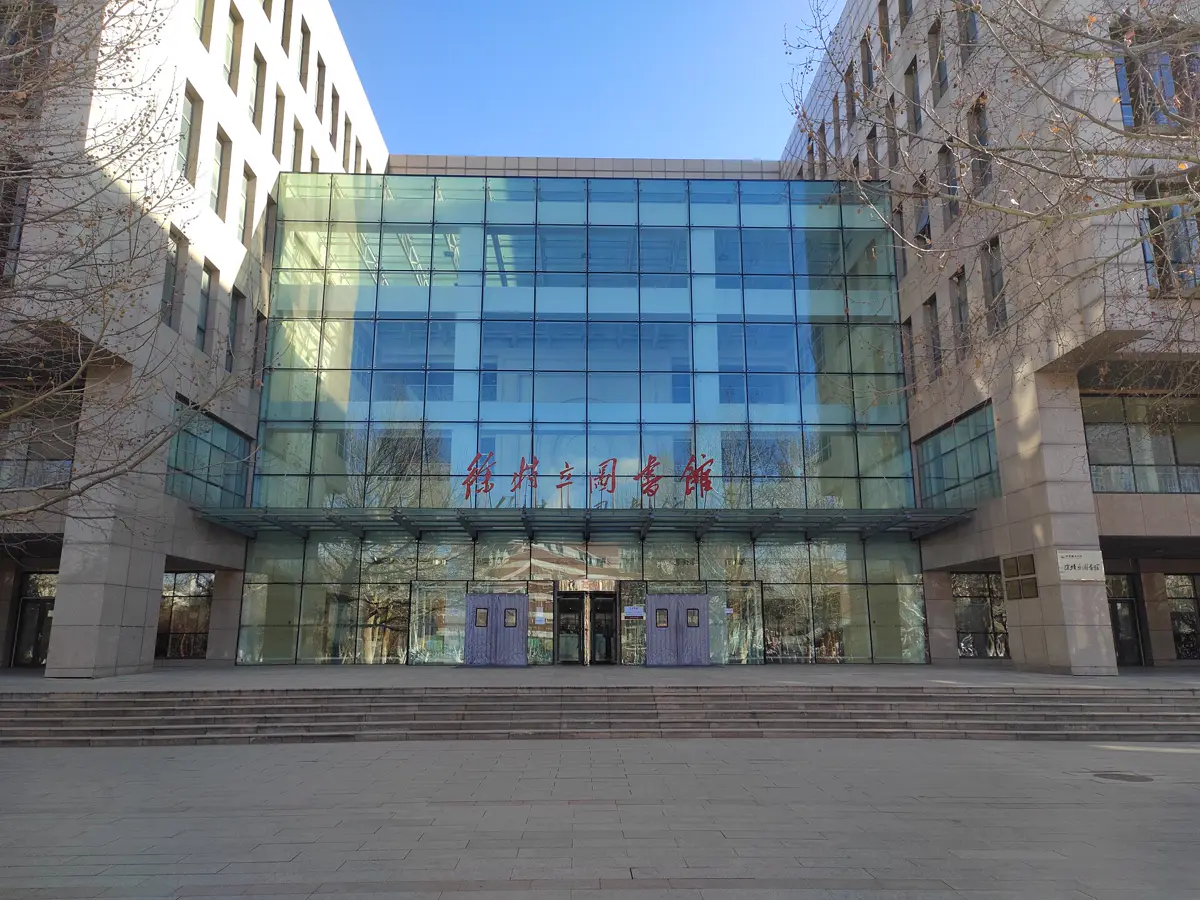
Xu Teli Library, Beijing Institute of Technology, Beijing
Admission is handled by each university, which issues the admission letter. For funding, the Chinese Embassy in Tunisia published the 2026/2027 Chinese Government Scholarship call on 12 November 2025, with online applications on campuschina.org until 18 February 2026; that round is closed. The 2027/2028 call was not yet on the embassy website on 23 October 2026 (dates to be confirmed). Tuition fees and the scholarship's allowances could not be checked on an official page today: to be confirmed on campuschina.org and each university's site.
A foreign student on a study residence permit may not work part-time or intern outside the university without its approval and a remark added to the permit by the public security exit-entry office stating where and for how long. A job needs a Z visa, a work permit from the competent local authority and a letter from the employer. A work residence permit runs for up to 5 years for high-level talent, urgently needed professionals and investors, up to 2 years for staff of registered employers with a good record, and up to 1 year in other cases.
Tunisians apply at the Embassy of China, 22 Rue du Docteur Burnet, 1002 Tunis (tel. +216 71 780 064, tunis@csm.mfa.gov.cn). Since 17 March 2025 the application starts online at consular.mfa.gov.cn/VISA/: create an account, fill in the form and upload the documents. Once the online check is passed, you hand in your passport at the embassy and, unless exempt, give your fingerprints; the visa is paid for and collected on the 4th working day after submission. The X1 visa is for study of more than 180 days and the X2 for shorter study. The X1 does not cover the whole course: a residence permit is then required in China.
Back in Tunisia, a Chinese degree can be submitted for equivalence to the Ministry of Higher Education and Scientific Research. Equivalence compares the foreign degree with the Tunisian one on entry requirements, years of study, programme content and assessment methods. Before enrolling, check that the university and programme are recognised, and keep transcripts and course descriptions.
For a study visa the embassy asks for: the application form; a passport valid for at least 6 months with at least 2 blank pages; if you visited China in the past two years, copies of those visas and entry and exit stamps; the original and a copy of the JW201 or JW202 form and of the admission letter; and proof of funds of USD 2,500 a year or a scholarship certificate. The official Shanghai guide lists the DQ form for X2 visas instead, so the exact form is to be confirmed with the embassy. The university issues these forms, which can be found on studyinchina.edu.cn. For the scholarship, use the document list attached to the embassy's 2027/2028 notice once it is out.
For an X1 or X2 visa the embassy asks for proof of funds of USD 2,500 a year or a scholarship certificate (notice of 11 May 2023, still online on 23 October 2026). The visa is free for Tunisian passports until 31 December 2026 (notice of 25 December 2025); the fee after that is to be confirmed. In China a residence permit costs CNY 400 for up to one year and CNY 800 for one to three years (National Immigration Administration scale). Tuition and housing: to be confirmed with the host university for 2027/2028. Never pay a middleman for a scholarship.
Chinese (Mandarin) is the main teaching language; some programmes are offered in English, so check each programme. The official Chinese test is the HSK. HSK 4 has 100 questions (listening, reading, writing) over about 105 minutes; the maximum score is 300 and the pass mark is 180. Results are valid for two years from the test date. The official site also announces a new format, HSK 3.0: check which version and level your university requires.
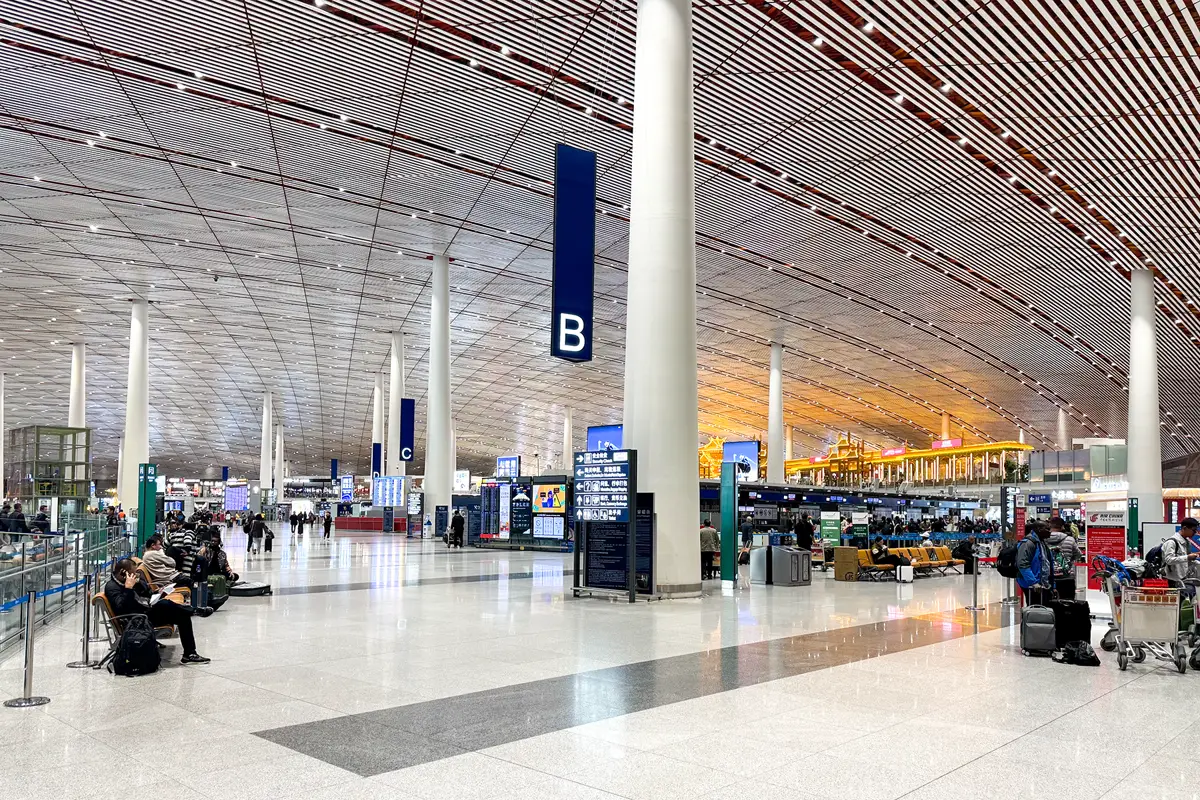
Terminal 3, Beijing Capital International Airport, Beijing
On an X1 visa, apply in person for your residence permit within 30 days of entering China at the public security exit-entry office where you live, with your admission letter and the university's letter stating the length of study. A permit valid for more than one year also requires a health certificate. To work or intern off campus, first get your university's approval, then the matching remark on your permit.
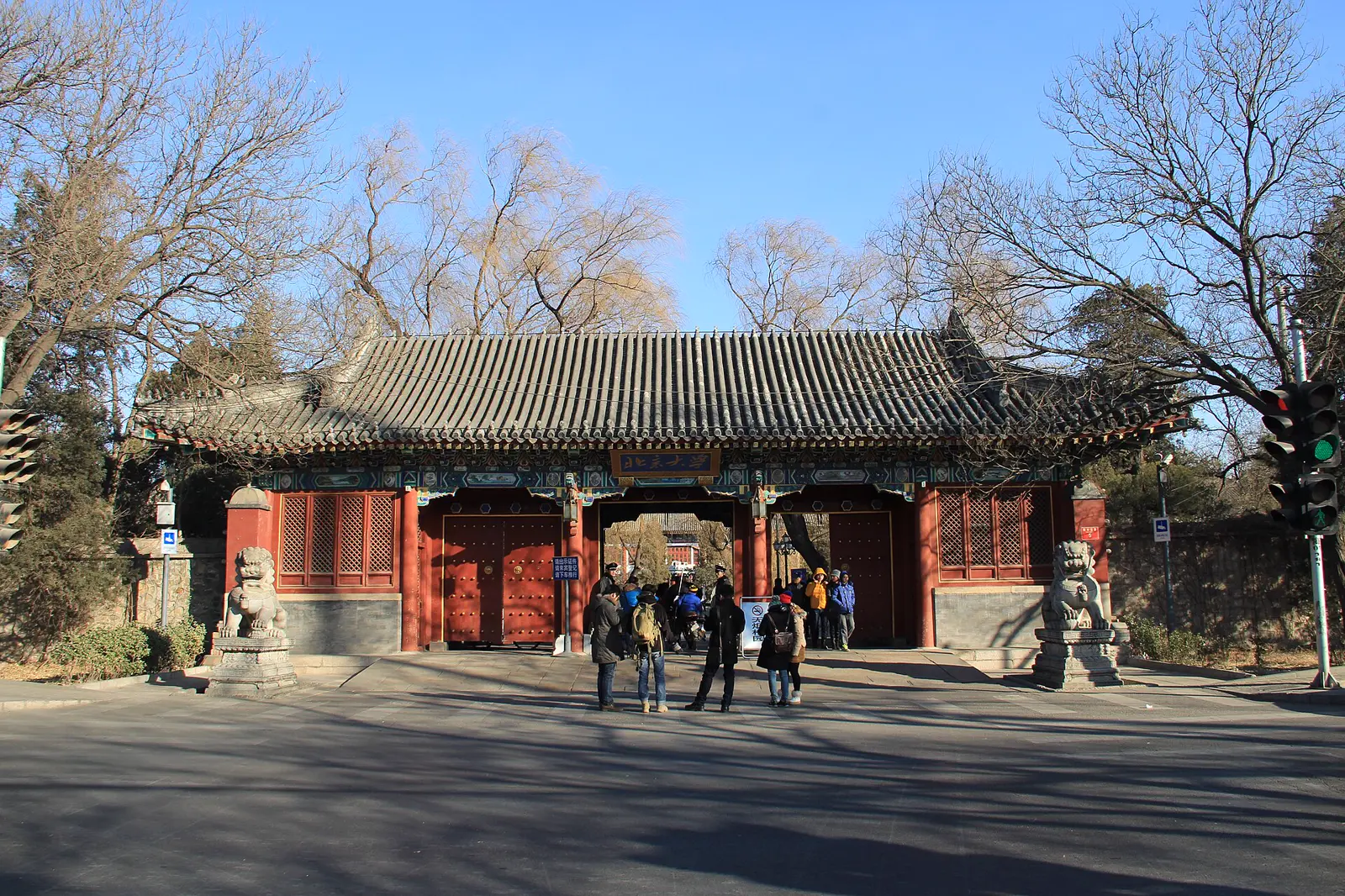
Yenching Academy of Peking University · Beijing, China
Scholarship
Costs covered
Open to Tunisians
Deadline: 30 Novin 11 days
Frequently asked questions
Is the Chinese Government Scholarship open to Tunisians?
Yes for 2026/2027: the Chinese Embassy in Tunisia published its own call, which closed on 18 February 2026. Dates for 2027/2028 are to be confirmed on the embassy site.
Which visa do I need to study in China?
X1 for study of more than 180 days, X2 for shorter stays. The embassy asks for the admission letter, the JW201 or JW202 form and proof of funds or a scholarship certificate.
Can I work while studying in China?
Outside the university, only with its approval and a remark on your residence permit stating where and for how long you work or intern.
Do I need an agency?
No. The embassy says it offers no paid service and has authorised no agency to sell advice. Applications for the 2026/2027 scholarship were made online on campuschina.org.